

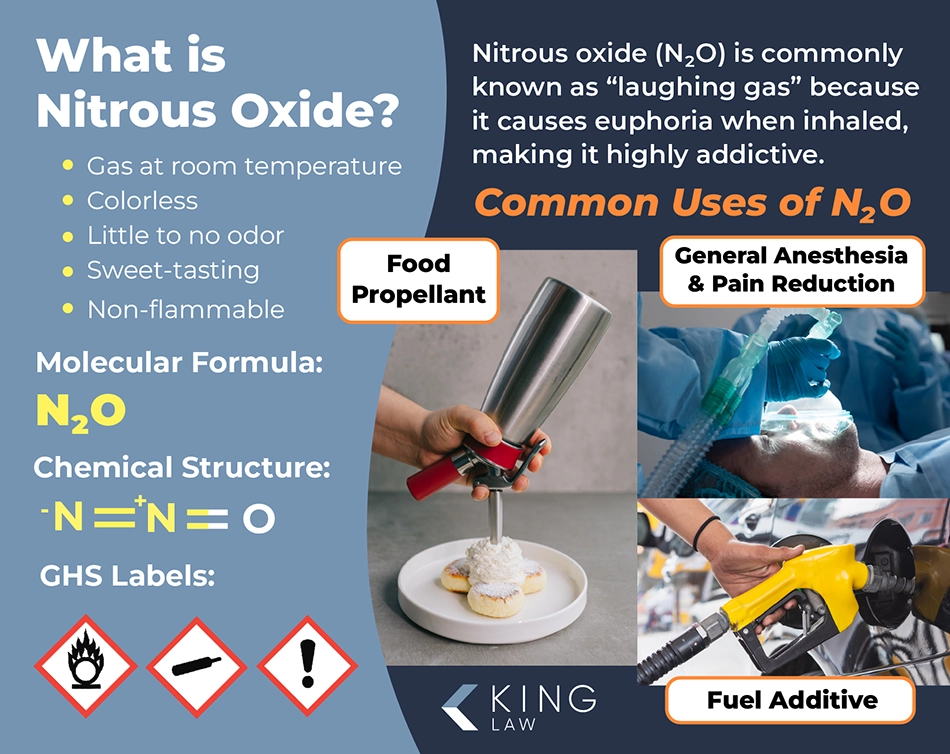
What is nitrous oxide?
Nitrous oxide is a compound of nitrogen and oxygen. The gas is colorless and has a sweet smell. Nitrous oxide has a pain-relieving and numbing effect, which is why it can be used as an anesthetic. It is also used in the chemicals industry and in farming.
Nitrous oxide is absorbed into the blood through the lungs. It then enters the brain and nerve tissue through the bloodstream. The body can’t break the gas down, so it has to be completely breathed out through the lungs again.
Nitrous oxide is usually sold in small cartridges (also called chargers) that can be used to make whipped cream. To use nitrous oxide as a drug, the cartridges are opened with special devices called “crackers.” The nitrous oxide is then filled into balloons and inhaled. There are also bigger chargers containing a lot of nitrous oxide.
Why is nitrous oxide used as a drug?
In recent years, more and more teenagers and young adults have started using nitrous oxide at parties and recreationally. At first it was mainly used in clubs and at music festivals. But many people now also take it in small groups or on their own at home.
There are various reasons why more people are now using it. Some people have the feeling that nitrous oxide is a relatively safe drug. It is also relatively cheap and easy to get hold of – and it is not illegal in Germany and many other countries. Many people are publicizing it on social media, too.
The consumption of nitrous oxide varies widely. It is most popular with teenagers and young adults. Surveys in some German cities and in other European countries found that between 10 and 20% of teenagers and young adults have tried nitrous oxide at least once.
Some of them only use it a couple of times a year, and only in small amounts (just a few small balloons). Others use it regularly in larger amounts (lots of balloons or big balloons). Nitrous oxide is also taken with other drugs like alcohol, cannabis or psychedelics.
There are no exact figures available on how many people use nitrous oxide in Germany.
What are the effects of nitrous oxide?
Nitrous oxide changes the reactions and metabolism of the nerve cells. That quickly causes feelings of euphoria and relaxation in the brain after it is breathed in (inhaled). Perception of time and space also changes temporarily. Many people giggle or laugh. The effects wear off after a few minutes.
Inhaling even small amounts can cause problems like dizziness, drowsiness, headaches and tingling. Nitrous oxide can also cause nausea, vomiting, balance problems and loss of consciousness. Mild hallucinations are possible, too.
If you inhale nitrous oxide from a balloon, your lungs don’t get any oxygen during that time. Some of the effects are due to a temporary lack of oxygen. They usually go away once you start breathing normally again. But the dizziness and drowsiness can last for up to 30 minutes.
What are the direct risks of taking nitrous oxide?
Nitrous oxide can make it more difficult to control your movements and can affect perception. That increases the risk of accidents and injuries, which is particularly dangerous on roads. Driving a car or cycling, walking at the roadside or operating machinery when under the influence of nitrous oxide isn’t just a danger to yourself, but also to others. This risk is even higher if other drugs have been used as well.
Acute nitrous oxide poisoning is rare. People usually need medical attention because they have injured themselves while under the influence. In rarer cases, the ‘high’ causes severe hallucinations that require treatment.
It is not known how often poisoning is caused by nitrous oxide in Germany. In other European countries, poison centers have reported about 70 (Denmark) to 130 (France) cases per year.
Deaths from nitrous oxide are an exception. They are usually due to suffocation because a mask is used or a plastic bag pulled over the head. Breathing difficulties can develop in confined, unventilated spaces (like cars) if larger amounts of the gas are released there, chasing the oxygen out.
What other risks are there?
Nitrous oxide is kept in cartridges (also called chargers) under high pressure. The cartridge and the gas get very cold when the gas is released. Touching the cold cartridge or breathing in the gas can cause severe frostbite and lung injuries. The gas warms up if it is filled into a balloon first.
What long-term damage can nitrous oxide cause?
There is a lack of research into the long-term health effects of nitrous oxide. It is not clear when the drug starts to cause damage. Experts assume that there are no long-term effects if nitrous oxide is only taken infrequently and in small amounts. But people who inhale it regularly and over a longer period of time risk damaging their brain and nerves. One cause is that nitrous oxide keeps our blood and nerve cells from processing the vitamin B12 we get from our food. Vitamin B12 is important for making nerves and blood. That is why using a lot of nitrous oxide can also increase the risk of anemia.
The typical first symptoms of nerve damage are tingling or “pins and needles” in your hands, arms or legs. But these unusual sensations can also develop in other parts of the body. Paralysis may also result. Nerve damage can mean you no longer have control of your muscles, which may then lead to balance problems and muscle weakness. Damage to nerves in the spinal cord can cause difficulties walking. It is not yet known how common these types of problems are, and whether they go away again.
Experts suspect that in rare cases, heavy use of nitrous oxide can also cause thrombosis, embolism or heart attack.
In certain circumstances, repeated heavy use can also have psychological effects like psychosis, hallucinations and mood swings.
It is not yet clear whether you can become physically dependent on nitrous oxide. But the repeated feeling of relaxation that you get from using it can cause psychological dependence.