
A flawless rosette on a plated dessert is only impressive if you can produce the next fifty just as cleanly. That is the real question behind choosing whipped cream charger size: not which option looks biggest, but which one keeps your kitchen moving at the pace your menu demands. A home baker finishing weekend cakes has a very different need from a bar team building infused cocktails through a packed Friday night.
Charger size affects more than how often you reorder. It shapes prep time, counter space, purchasing strategy, equipment compatibility, and the consistency of service. Get the fit right and whipped cream, foams, and rapid infusions feel like a reliable part of your creative process. Get it wrong and a busy shift can turn into a scramble for inventory.
Choosing Whipped Cream Charger Size Starts With Volume
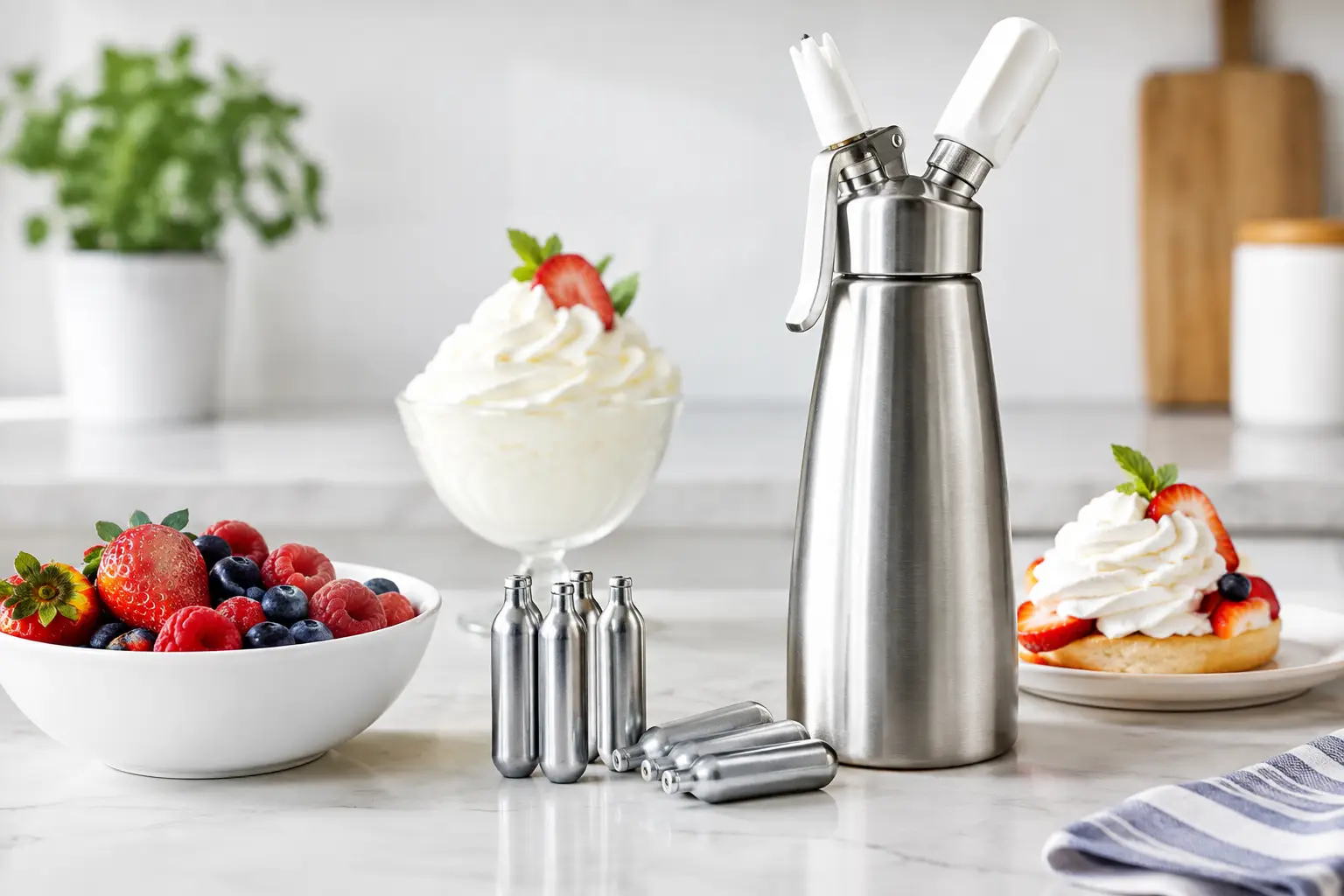
Start with the honest version of your weekly output. Think in batches and service windows, not vague plans to “use more later.” If you make whipped cream for occasional desserts, coffee drinks, or one special dinner at home, smaller chargers are usually the practical choice. They require less storage, are easy to keep on hand, and let you buy for the work you actually do.
For a restaurant pastry station, catering company, dessert pop-up, or high-volume cocktail program, larger-format culinary N2O tanks can make more sense. They reduce the interruption of changing individual chargers and help teams maintain a steadier prep rhythm. That efficiency matters when several cooks or bartenders rely on whipped components throughout service.
The goal is not to buy the maximum capacity available. A tank that sits unused for long stretches may tie up budget and storage room, while a supply that runs out halfway through a major event costs time when time is least available. Match capacity to a realistic period of use, then keep a sensible backup for demand spikes.
Think About Your Workflow, Not Just Your Menu
Two kitchens can serve the same number of guests and need completely different setups. A bakery may create most of its whipped cream during morning prep and use it across the day. A cocktail bar may need small, repeated batches of foam or rapid infusions at unpredictable moments. One benefits from concentrated production; the other may prioritize quick, flexible access.
Ask where the gas product will be used and who will use it. Individual chargers pair naturally with a standard whipped cream dispenser and are familiar to many home cooks and culinary teams. Larger tanks are better suited to operations that have the appropriate compatible regulator, hose, and dispenser setup and want less frequent changeover.
This is also where your staff experience matters. A simple setup can be the right choice for an event team, a mobile caterer, or a busy operation where multiple people share prep responsibilities. A larger format may be more efficient for a dedicated bar lead or pastry crew with a repeatable station routine. Expert performance comes from the full system – product, equipment, process, and trained hands – not capacity alone.
Consider Peak Demand, Not Average Demand
Average usage can be misleading. A cafe may use modest amounts of whipped cream most weekdays, then burn through its supply during a holiday brunch. A caterer may have quiet weeks followed by a single large wedding. Your charger size should cover the demands that matter most without forcing you to overstock every month.
Look back at your busiest recent service and estimate what was used for desserts, beverages, and experimental menu items. Then factor in whether you want enough on hand to test a new flavor concept or remake a batch without disrupting service. For professionals, a small reserve is a practical part of consistency.
Dispenser Compatibility Is Non-Negotiable
Never select a charger or tank based only on price, flavor, or gas capacity. Confirm that it is designed for your dispenser and, where applicable, your regulator and accessories. Individual chargers and larger culinary tanks serve different equipment systems. The wrong fit is not a shortcut – it is an interruption to your workflow and an avoidable safety concern.
Before purchasing, check your equipment manufacturer’s guidance for the accepted charger type, connection requirements, and operating instructions. If you are building a larger-format setup, ensure every component is intended to work together. A dependable culinary result starts with compatible, purpose-built gear.
This is especially relevant for ambitious home cooks moving beyond a basic dispenser. Bigger capacity can be appealing when you are experimenting with espuma, mousse, sauce textures, or cocktail infusions, but it should come with an equipment setup you understand and can operate as directed. Go above the norm creatively, not casually.
Storage Can Decide the Right Size
A larger order is not automatically a better value if your kitchen has nowhere appropriate to keep it. Consider the actual space available in your pantry, dry storage area, bar back, or prep room. Inventory should be organized, protected from excess heat, and accessible without cluttering an active work zone.
Smaller chargers are easier to distribute across compact stations and can be useful for mobile service. Larger tanks may reduce the number of individual units you manage, but they need a dedicated, stable storage and use area. For a catering business that moves between venues, portability may outweigh the convenience of maximum capacity. For a fixed restaurant bar, the balance may shift toward efficiency.
Also consider delivery cadence. A high-volume operation may prefer bulk purchasing to simplify ordering and maintain a predictable supply. A lower-volume buyer may value smaller orders that leave more room for changing menus, seasonal needs, or different culinary projects. The best size is often the one that makes restocking feel routine rather than urgent.
Compare Cost Per Service, Not Just Shelf Price
The lowest upfront price does not always create the lowest operating cost. Individual chargers can be a smart, controlled purchase for occasional use, but frequent high-volume use may make their repeated handling less efficient. Larger-format options can improve value for regular production by reducing replacement time and supporting bulk inventory planning.
Still, cost per service depends on your actual habits. If a larger tank takes too long to use, any theoretical savings can disappear into unused inventory, limited storage, or equipment you do not fully need. Treat size as a business decision: calculate how often you use whipped components, how much labor goes into changeovers, and how much product demand fluctuates.
For serious food-service buyers, consistency has a value of its own. A supplier with dependable availability, recognized culinary brands, secure payment options, and bulk-order capacity can help protect a menu from last-minute substitutions. Galaxy Gas offers a broad lineup for buyers who want to compare capacities, brands, and flavor-forward options in one place.
Flavor Is a Creative Factor, Not a Capacity Factor
Flavored culinary N2O products can bring a playful edge to dessert and beverage presentation, whether you are building a birthday-cake-inspired topping, a fruit-forward coffee finish, or a memorable cocktail garnish. But flavor should be selected after you have settled the operational basics. First choose the right size and compatible setup. Then choose the flavor profile that supports your concept.
That order keeps experimentation exciting instead of expensive. A home entertainer can try something novel in a smaller purchase without committing significant storage space. A dessert shop with a proven seasonal hit may be ready to stock more confidently. Build your inventory around what guests actually reorder, not only what looks exciting on a product grid.
A Practical Choice for Every Kind of Kitchen
If you produce occasional whipped cream at home, individual chargers offer straightforward convenience and manageable storage. If you regularly prep for a family gathering, small business, or recurring event, buying a larger quantity of individual chargers may be the sweet spot between flexibility and readiness.
If your team produces whipped cream, foams, or infused drinks every day, assess a larger tank system with compatible equipment. The benefit is usually workflow: fewer interruptions, more focused prep, and a supply approach that can keep pace with professional service. For seasonal businesses and caterers, the right answer may change throughout the year. There is nothing inefficient about using smaller formats during quiet periods and scaling up when your calendar fills.
Whatever size you choose, use culinary nitrous oxide only with intended food-preparation equipment and follow all product and equipment instructions. Direct inhalation is dangerous and has no place in a professional or home culinary setting.
The right charger size should fade into the background once service begins. When your whipped cream holds its shape, your cocktail foam arrives on cue, and your team is free to focus on the plate, you have chosen capacity that works as hard as your ideas do.