

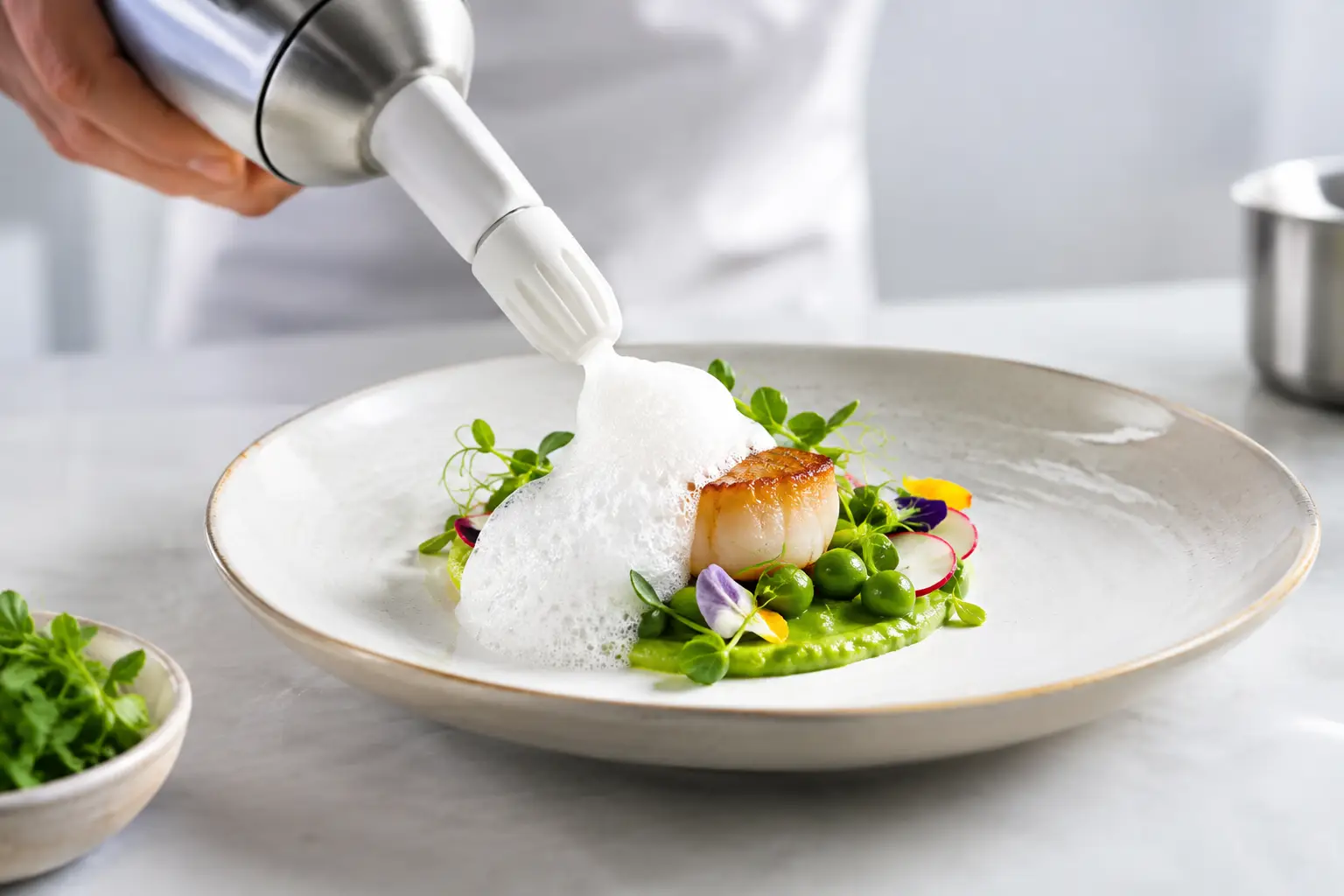
A perfectly placed foam can change the first bite before the guest reaches the plate. It adds aroma, contrast, and a visual finish that signals intention. The best molecular gastronomy foam techniques are not about making food look futuristic for its own sake. They are about concentrating flavor in a lighter texture, then delivering it at exactly the right moment.
For Michelin-starred chefs, high-volume mixologists, and ambitious home cooks, the path is simpler than it can appear. Choose the right foam style for the ingredient, stabilize only as much as needed, and use the right tool for the service window. A delicate citrus air and a warm potato espuma may both be called foam, but they demand very different approaches.
Start With the Foam You Want to Serve
There are three useful categories to keep straight: airs, cold foams, and espumas. An air is the lightest option, usually created with an immersion blender and served immediately. It works best when aroma matters as much as flavor – think yuzu over crudo, ginger over a highball, or herb oil over a spring vegetable dish.
Cold foams have more body and can hold for several minutes, depending on the base. They are a strong fit for cocktails, chilled soups, fruit-forward desserts, and plated appetizers. A little xanthan gum, egg white, aquafaba, or another appropriate stabilizer can help create finer bubbles and slow separation.
An espuma is the most structured of the group. It is produced in a whipped-cream dispenser charged with culinary nitrous oxide and is ideal for smooth purees, creams, sauces, and custards. This is where a warm parmesan cloud, a silky corn foam, or a dramatic coconut topping becomes realistic for repeated service.
The trade-off is texture. The lighter the foam, the more immediate and aromatic it feels, but the shorter its lifespan. The denser the foam, the more stable it becomes, but too much thickener can make it read as mousse rather than foam. Build toward the experience you want on the palate instead of chasing maximum volume.
Molecular Gastronomy Foam Techniques for Better Texture
Build a base with a clear flavor
Foam magnifies both great flavor and bad flavor. Start with a base that tastes slightly more intense than you would serve on its own, because incorporated air softens the impact. Strain juices, broths, infusions, and purees carefully. Even tiny particles can clog a dispenser valve or create an uneven texture.
For savory espumas, a smooth, flavorful puree is often the best foundation. Roasted cauliflower, sweet corn, mushrooms, peas, and potatoes all work well when blended completely smooth with enough liquid to flow through the dispenser. Cream, stock, milk, or plant-based alternatives can round out the base, depending on the dish.
For beverage work, acidity needs special attention. Citrus, vinegar, and highly tannic ingredients can make dairy bases split or destabilize certain proteins. If a cocktail foam needs a bright lemon profile, consider a non-dairy structure or make the citrus the aromatic top note rather than the main body of the foam.
Pick the right stabilizer, not the most stabilizer
Lecithin is a go-to for airy, quick-service foams. It excels with water-based liquids and produces large, delicate bubbles when worked at the surface with an immersion blender. It does not create a long-lasting cap, so make it close to plating and spoon only the top layer of bubbles onto the dish.
Xanthan gum adds viscosity at very low levels and helps keep a cold foam from collapsing or separating. It is especially useful in juices, syrups, and cocktail ingredients that lack natural body. Add too much, though, and the foam turns slick or gummy. Blend thoroughly, let the liquid hydrate, then test before building a full batch.
Gelatin can create a warm or cold espuma with a soft, luxurious structure. It is particularly effective for creamy bases, but temperature matters. If the base is too hot, the foam may emerge loose; if it is too cold, it can set inside the dispenser. Agar offers a different gel structure and can be useful for plant-forward work, though it generally requires more precise heating and handling.
Egg white and aquafaba offer familiar, cocktail-friendly foaming power. They are practical for shaken drinks and can produce a dense cap with a more classic texture. They are less ideal when you want a clean, transparent flavor or need a foam to sit through a long banquet pickup.
Match the tool to the service pace
An immersion blender gives immediate feedback. Keep the blade near the surface, angle the container slightly, and blend until the foam rises. This method is fast, expressive, and excellent for live plating, but it is not designed for long holds.
A dispenser offers more controlled output and greater consistency across plates or drinks. Use a culinary-grade, food-safe dispenser and compatible food-grade nitrous oxide chargers or tanks according to the equipment manufacturer’s instructions. For a busy bar or dessert station, that consistency can protect presentation when tickets start stacking up.
Temperature is part of the tool choice. Cold bases generally need time to chill before charging, while warm espumas need to stay within the dispenser’s approved temperature range. Never force a thick, unstrained puree through the system. If it does not pour smoothly from a pitcher, it needs more blending, more straining, or a small adjustment in liquid.
Galaxy Gas serves culinary teams that want dependable gas options across individual and bulk service needs, but the same rule applies whether you are making two desserts or two hundred: use gas only for intended food and beverage preparation. Direct inhalation is dangerous and has no place in a professional kitchen or home bar.
Four Foam Applications Worth Putting on the Menu
A basil-lecithin air over tomato water is a sharp, clean way to finish a summer course. The air carries basil aroma first, while the tomato delivers depth beneath it. Make it to order because its fragility is the point.
For a cocktail program, a passion fruit or salted citrus foam can turn a familiar sour into a signature pour. Keep the flavor bright, use a stabilizer sparingly, and test the foam against the drink’s acid level. A foam that looks perfect in a glass but melts into the cocktail before it reaches the guest needs more body or faster service.
A warm cheddar espuma can bring lift to a burger, baked potato, or savory tart without adding a heavy scoop of sauce. The base must be exceptionally smooth and strained, since cheese particles are among the fastest ways to create dispenser problems. Use it as an accent, not a replacement for every element of texture on the plate.
For dessert, a vanilla bean, coconut, or flavored whipped-cream espuma can create an elevated finish with less visual weight than frosting. Pair it with crunch and acidity – berries, toasted nuts, cocoa nibs, or a bright fruit gel – so the dish has contrast rather than one continuous soft texture.
Why Foams Fail and How to Fix Them
If a foam collapses immediately, the liquid may be too thin, too warm, or too low in a suitable stabilizer. First ask whether it needs to last longer at all. An air that survives thirty seconds may be perfectly right for a chef at the pass, while a catered event needs a more structured cold foam.
If the dispenser sputters, the base is often too thick or insufficiently strained. Pass it through a fine-mesh strainer before filling. Also leave appropriate headspace and avoid overfilling, since the gas needs room to distribute through the liquid.
If the flavor seems muted, increase seasoning or aromatic intensity before you adjust the structure. Salt, acid, sweetness, and temperature all influence perception. A chilled foam may need a little more seasoning than the same base served warm.
If the foam is dense and wet, reduce heavy fats or thickening agents, then test again. A spoonable cloud should feel light, even when it is rich. Small bench tests save expensive ingredients and prevent a full service batch from becoming a guess.
The most memorable foams do not announce the technique before the flavor. They make a scallop taste more like scallop, a cocktail smell more like fresh citrus, or a dessert feel more celebratory with one precise finish. Start with an ingredient worth highlighting, test it under real service conditions, and let the foam earn its place on the plate.