
A flat whipped topping or a cocktail infusion that misses service is not a small problem when guests are waiting. Food grade N2O tanks give chefs, pastry teams, bar programs, and ambitious home cooks a dependable way to build lighter textures, faster infusions, and more expressive presentations. The right tank is not simply a purchase of gas capacity. It is a decision about consistency, workflow, equipment compatibility, and the kind of culinary results you want to put on the table.
What Food Grade N2O Tanks Bring to the Kitchen
Nitrous oxide is used in culinary preparation because it helps create the aerated texture people expect from whipped cream while also supporting rapid infusion techniques. In a compatible cream dispenser, N2O dissolves into a liquid or fat-based mixture under pressure. When the mixture is dispensed, the gas expands to create a smooth, airy finish.
That familiar use has room to go far beyond a garnish. Pastry professionals can produce stable whipped creams, mousses, sauces, and foams with a clean, controlled presentation. Bar professionals can use compatible equipment for rapid infusions that bring fruit, herbs, spices, and other flavor components into spirits and mixers on a much shorter timeline than traditional steeping. At home, the same category opens the door to a dessert course that looks more considered than a bowl and a spoon.
The point is not to make every dish more complicated. It is to give your kitchen another reliable technique. A well-chosen supply of culinary N2O lets a busy team repeat that technique without stopping mid-prep to rethink inventory.
How to Choose Food Grade N2O Tanks
The best option depends on how often you use it, how many portions you are preparing, and which equipment is already in your kitchen. Capacity matters, but it should be considered alongside purity, brand reputation, regulator requirements, and storage space.
Match Capacity to Your Service Volume
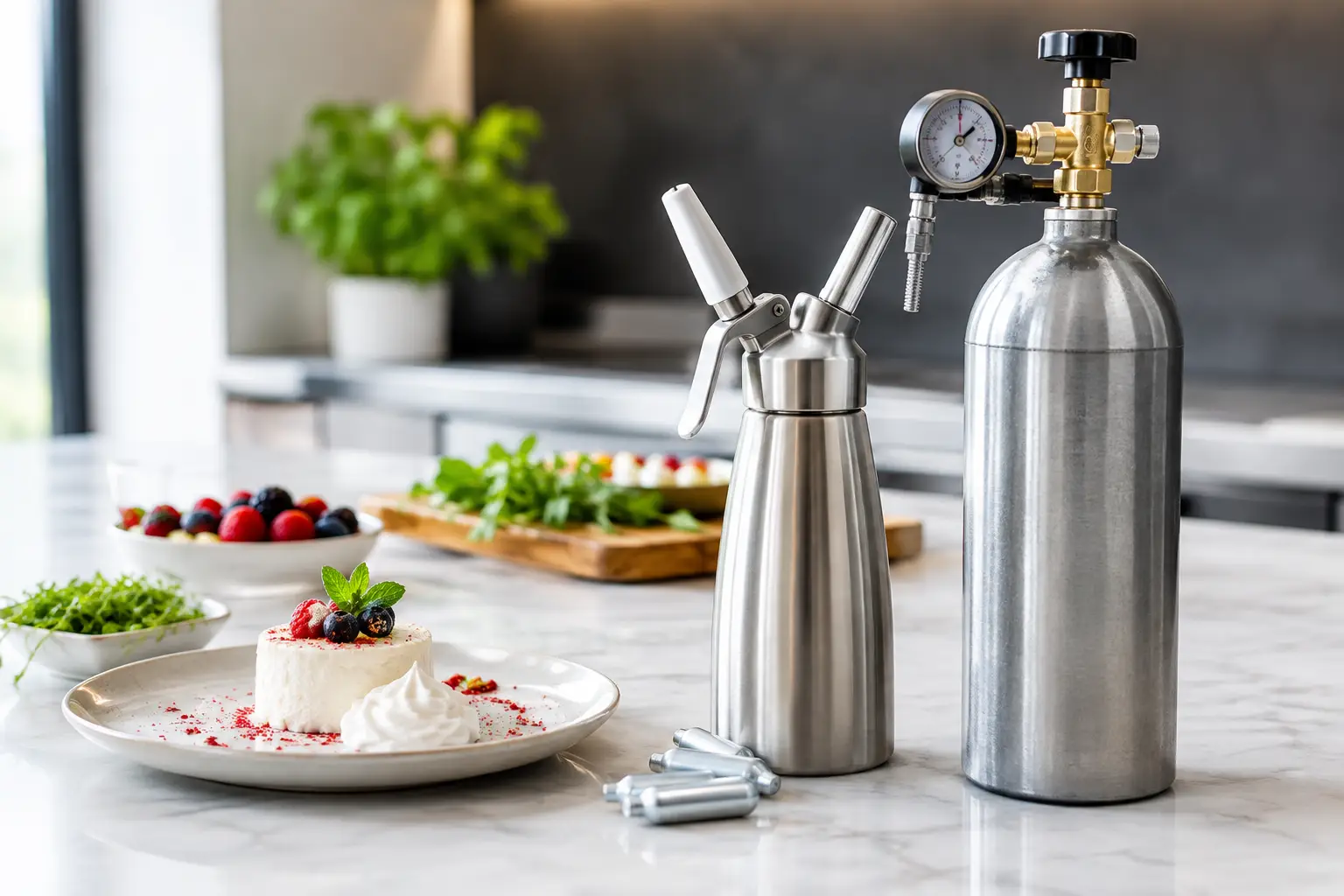
Small chargers make sense for occasional home desserts, recipe testing, or a single dispenser. They are compact and easy to portion into a low-volume workflow. Larger tanks are built for cooks and operators who want fewer interruptions during sustained production, whether that means a packed weekend brunch, an event dessert station, or a high-volume cocktail program.
A larger format can reduce the repeated handling associated with individual chargers and help streamline replenishment. That said, bigger is not automatically better. A home cook making whipped cream once a month may value compact storage more than maximum capacity. A catering business serving hundreds of guests may see real value in a tank that supports continuous output with the right compatible regulator and dispenser setup.
Think about peak demand, not just average demand. If Saturday service is when your bar program moves the most infused cocktails or your bakery produces the most finished desserts, that is the workload your inventory plan needs to handle.
Prioritize Culinary Purity and Trusted Brands
For food and beverage use, product quality should never be an afterthought. Choose products clearly intended for culinary applications and supplied by established brands. Reliable food-grade gas supports cleaner flavor expression and predictable dispensing performance, which matters whether you are finishing a strawberry shortcake or building a delicate foam for a plated entrée.
Recognized culinary gas brands also make it easier to shop around the variables that matter: available capacities, tank styles, packaging, and bulk-order options. Galaxy Gas carries a broad selection for buyers who want to compare familiar names and find a format that fits their pace of service.
Purity is only one part of performance. Your ingredients still need proper formulation. Very thin mixtures, mixtures with large particles, and recipes that are not adequately chilled can dispense poorly regardless of the tank you choose. Great tools reward sound technique.
Confirm Equipment Compatibility Before Ordering
A tank and a dispenser are not interchangeable accessories. Before you buy, confirm that your regulator, hose, connections, and dispenser are designed for the tank format you are considering. Follow the manufacturer instructions for every component rather than trying to adapt fittings or force a connection.
This is especially relevant for buyers moving from individual chargers to larger tank systems. The workflow can be more efficient, but it may require dedicated compatible equipment. Factor that into the purchase decision from the beginning. The lowest sticker price is not always the lowest operational cost if it sends you back for missing accessories later.
Where N2O Earns Its Place in Modern Menus
Whipped cream remains the classic application, but creative kitchens have expanded the role of N2O in smart, practical ways. The most successful uses are not gimmicks. They solve a service problem or improve the final experience.
For dessert teams, a dispenser can hold a flavored cream ready for clean, consistent plating. Vanilla bean, chocolate, citrus, coffee, and seasonal spice profiles can add contrast without slowing the line. Flavored culinary products can also bring an extra note of novelty to dessert beverages and celebratory presentations, though a neutral option remains the better choice when you want complete control over the recipe’s flavor profile.
For bar teams, rapid infusion can support house cocktails with a distinct signature. Consider the difference between a standard drink and one built around a carefully chosen herb, fruit, pepper, tea, or spice component. The technique can shorten experimentation time, but it does not eliminate the need for tasting. Some ingredients extract quickly and aggressively, so small test batches are the sensible route before a flavor reaches the menu.
Chefs working with savory food can also use culinary foams to create contrast in temperature and texture. A light sauce over a richer protein or vegetable dish can make a plate feel more refined without making it heavier. As with any modernist technique, restraint matters. A foam should sharpen the dish, not distract from it.
Inventory, Storage, and Service Discipline
Professional performance comes from preparation. Keep food grade N2O tanks stored upright in a cool, dry area away from heat sources and direct sun. Protect tanks from physical damage, keep them secured against tipping, and follow all label directions and local requirements for storage and handling.
For an active kitchen or event operation, assign one person to monitor inventory. Track what is opened, what is in reserve, and what moves fastest during high-demand periods. This simple habit prevents the familiar scramble of discovering an empty supply when the dining room is full.
Bulk ordering can make practical sense when your usage is steady and storage is appropriate. It may improve unit economics and reduce ordering frequency, particularly for caterers, dessert businesses, and beverage programs. But buying too far ahead can tie up cash and crowd valuable storage space. Build your order around realistic demand, upcoming events, and the formats your equipment can actually use.
Clean equipment deserves equal attention. Follow the cleaning guidance for dispensers, regulators, and related accessories after use. Residue can affect both hygiene and dispensing consistency. A premium tank cannot compensate for neglected tools.
Culinary Use Means Responsible Use
These products are for intended food and beverage applications only. Direct inhalation from tanks or chargers is dangerous and has no place in a professional kitchen, home kitchen, bar program, or event setting. Keep products away from children, train staff on proper handling, and use compatible equipment as directed by its manufacturer.
That standard protects people, but it also protects the craft. Culinary N2O is valuable because it helps serious cooks create better texture, faster flavor development, and cleaner service. Treating it as a purposeful kitchen tool keeps the focus where it belongs: on the food, the drink, and the guest experience.
A thoughtfully selected tank can become one of those quiet pieces of equipment that changes how confidently you execute a menu. Start with your real volume, choose culinary-grade quality and compatible gear, then let your recipes do something memorable with the extra control.