

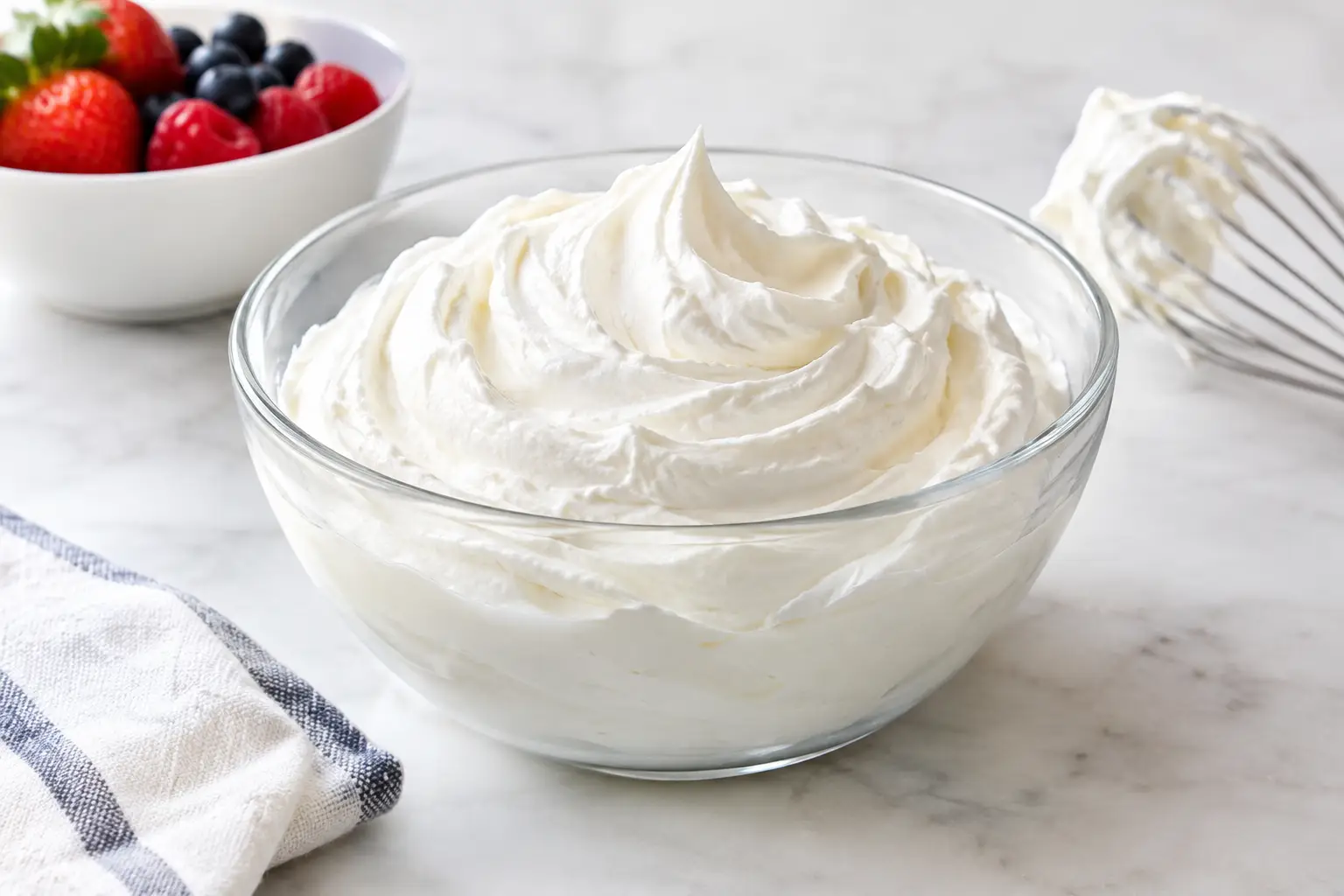
A perfect whipped-cream rosette can look effortless for five minutes, then slump into a glossy puddle by dessert service. When the menu calls for piped cupcakes, plated cakes, layered trifles, iced coffee, or a busy cocktail station, you need more than ordinary cream. Knowing how to prepare stabilized whipped cream gives you a finish that stays light, clean, and camera-ready long after the first swirl.
Stabilized cream is not about making whipped cream stiff, heavy, or overly sweet. It is about giving the air-and-fat structure enough support to hold its shape under real kitchen conditions: time, refrigeration, piping, transport, and moisture from neighboring ingredients. The right method depends on what you are serving, how far ahead you are working, and whether the cream is being spooned, piped, layered, or dispensed.
Start With the Right Cream and Temperature
Choose heavy whipping cream with at least 36% milk fat. Higher fat content produces a more stable foam and a richer finish, which matters when you want defined ridges from a star tip or a cloudlike topping that does not collapse on a cold brew.
Temperature does much of the work. Your cream should be thoroughly chilled, and a cold bowl and whisk or mixer attachment give you a useful advantage. Warm cream does not whip efficiently because the fat cannot build the structure needed to trap air. If your kitchen is hot, chill the tools for 10 to 15 minutes before starting.
Whip at medium speed until the cream begins to thicken, then watch it closely. Add sweetener and flavoring when the cream reaches soft peaks, unless your chosen stabilizer needs to be incorporated earlier. Stop at medium-stiff peaks for most applications. The tip should stand with a slight curve rather than forming a dry, rigid spike.
Overwhipping is one of the fastest ways to lose the luxurious texture you were trying to protect. Once the cream looks grainy, it is moving toward butter. You can sometimes rescue slightly overwhipped cream with a small splash of cold liquid cream folded in gently, but prevention is better when presentation matters.
How to Prepare Stabilized Whipped Cream With Gelatin
Gelatin is the classic choice for whipped cream that needs to hold a piped design for hours. It creates a subtle supporting network as the cream chills, making it especially useful for layer cakes, dessert cups, cream pies, and catered displays. Used correctly, it should not make the cream taste or feel like gelatin.
For about 2 cups of heavy whipping cream, bloom 1 teaspoon of unflavored powdered gelatin in 1 tablespoon of cold water. Let it stand for several minutes until the granules absorb the water. Warm the mixture gently just until it becomes clear and fluid. Do not boil it.
Begin whipping the cold cream. At soft peaks, add the dissolved gelatin in a very thin, steady stream while the mixer runs on low. The gelatin should be warm but not hot, and it should flow easily. If it has cooled and started to set, warm it briefly again before using it. Finish whipping to medium-stiff peaks.
Gelatin-stabilized cream is dependable, but it does have a trade-off. It sets firmer as it chills, so it is not always the first choice for a cream topping meant to feel extra soft and freshly spooned. It also is not vegetarian, which may shape your menu decision.
A Note on Gelatin Texture
The common mistake is adding gelatin too quickly or too cool. That creates tiny set strands rather than an even structure, leaving the whipped cream with a flecked or slightly gummy texture. Work with a thin stream, keep the mixer moving, and make a small test batch before a major event if the finished dessert needs a particularly refined look.
Mascarpone Makes a Richer, More Forgiving Finish
For bakery-style frosting and elegant dessert piping, mascarpone is one of the most useful stabilizers in the kitchen. Its fat content helps the cream stay structured without the more noticeable set of gelatin. The result is lush, rich, and well suited to fruit tarts, tiramisu-inspired desserts, carrot cake, and filled choux pastry.
Use about 4 ounces of cold mascarpone for every 2 cups of cold heavy cream. Beat the mascarpone briefly with powdered sugar and vanilla until smooth, then add the cream gradually and whip to medium-stiff peaks. Keep the mixer speed moderate once the cream starts gaining volume.
This approach makes a cream that pipes beautifully, but mascarpone can split if it is overworked or if the ingredients are dramatically different in temperature. Cold ingredients are the rule. If you want a lighter flavor for a delicate strawberry shortcake, use less mascarpone or choose a different method. This is a richer finish by design.
Instant Pudding Mix Is a Practical Shortcut
For high-volume home entertaining, dessert bars, or a fast make-ahead topping, instant vanilla pudding mix can stabilize cream with minimal effort. A few tablespoons folded or whipped into the cream add sweetness, flavor, and structure. It is especially practical when the whipped cream will be layered with cookies, pudding, fruit, or cake.
The trade-off is flavor control. Pudding mix has its own sweetness and vanilla profile, so it is less suited to a clean, lightly sweetened cream for a polished plated dessert. It is also not the best path when you want the flavor of a premium vanilla bean, espresso, citrus, or a flavored syrup to lead.
Choose a Stabilizer Based on Service
There is no single best way to prepare stabilized whipped cream. Gelatin is the choice for maximum staying power and sharp piping. Mascarpone offers a fuller, more luxurious mouthfeel with strong hold. Pudding mix provides convenience and dependable results for casual make-ahead desserts.
For a cold beverage topping served immediately, ordinary whipped cream may be all you need. For a wedding-style cake, a catering tray, or a dessert that will wait in the refrigerator for several hours, stabilization is worth the extra minute. Humid rooms, warm pass windows, and fruit-heavy desserts all call for more structure.
If you are working with a whipped-cream dispenser, use only preparations appropriate for the equipment and follow the manufacturer’s capacity, charging, and cleaning directions. Strain mixtures that include any flavoring or stabilizer that could contain particles, and never overfill the canister. Culinary nitrous oxide is for food preparation only – never inhale it or use equipment outside its intended purpose.
Flavor Without Losing Structure
Liquid flavorings can loosen whipped cream when added carelessly. Vanilla extract is rarely a problem in small amounts, but fruit purees, liqueurs, syrups, and coffee can all affect stability. Reduce wet ingredients when possible, use concentrated flavorings, or fold in cooled fruit compote after the cream is whipped and stabilized.
Powdered sugar is generally a better choice than granulated sugar for smooth, stable whipped cream. Its fine texture dissolves quickly, and the small amount of cornstarch commonly included in commercial powdered sugar can offer a little extra support. Start modestly. Whipped cream should complement the dessert, not bury it under sweetness.
For a more inventive menu, build flavor around the dish rather than loading the cream with liquid. Think cocoa powder with a chocolate tart, finely ground freeze-dried berries with a lemon cake, espresso powder with tiramisu, or a touch of citrus zest with a berry pavlova. These additions bring impact without asking the foam to carry too much moisture.
Piping, Holding, and Serving Like a Pro
Once whipped cream reaches the right peak, use it promptly. Transfer it to a piping bag with a large tip for clean definition, then pipe with steady pressure and keep the bag cool between rounds. A closed star tip delivers classic ridges; a round tip creates modern, smooth dollops; an open star gives a softer, more decorative finish.
Refrigerate finished desserts whenever possible. Stabilized whipped cream is more resilient, not invincible. Heat, direct sun, and a long wait at room temperature can still weaken the structure. For events, hold desserts in the coldest practical service environment and put out smaller batches instead of one large tray.
Galaxy Gas helps chefs, bar teams, and ambitious home cooks build elevated finishes with culinary equipment designed for dependable performance. Whether your goal is a composed restaurant dessert or a high-impact coffee bar, consistency is what turns a good topping into a finishing move people remember.
A stable swirl gives you freedom: more time to plate, more confidence in transport, and more room to push flavor and presentation above the norm. Make one test batch, match the stabilizer to the service, and let the final flourish hold its place.