
A finished batch of whipped mascarpone or a busy round of cocktail service leaves behind one small but consequential item: the used charger. Following cream charger disposal instructions is part of running a clean, professional kitchen, whether you are plating desserts for 200 guests or building elevated drinks at home. The rule that matters most is simple: do not treat a pressurized nitrous oxide charger like ordinary metal waste until you know it is completely empty and your local program accepts it.
Start by identifying what you have
A standard whipped-cream charger is a small, single-use steel cartridge filled with food-grade nitrous oxide. It is designed to be used with a compatible cream dispenser, where the gas aerates cream and supports fast culinary preparation. Once discharged correctly, the cartridge is typically empty, but it is still a steel container that should be handled responsibly.
Larger nitrous oxide cylinders and tanks are different. They hold substantially more gas, may use regulators or valves, and are not handled through the same disposal path as small cartridges. Never assume the instructions for a single charger apply to a tank, and never force a tank into curbside recycling or regular trash.
The distinction matters for safety, local compliance, and your recycling team’s equipment. A pressurized container that enters a compactor, shredder, or baler can create a serious hazard. A few seconds spent checking the format of your culinary gas product can prevent a costly mistake.
Cream charger disposal instructions: the safe workflow
For standard, single-use chargers, use the cartridge only with the dispenser and holder designed for it. During normal culinary use, the charger is pierced inside the holder and its contents are released into the dispenser. Do not attempt to release gas by puncturing, crushing, cutting, or modifying the cartridge yourself.
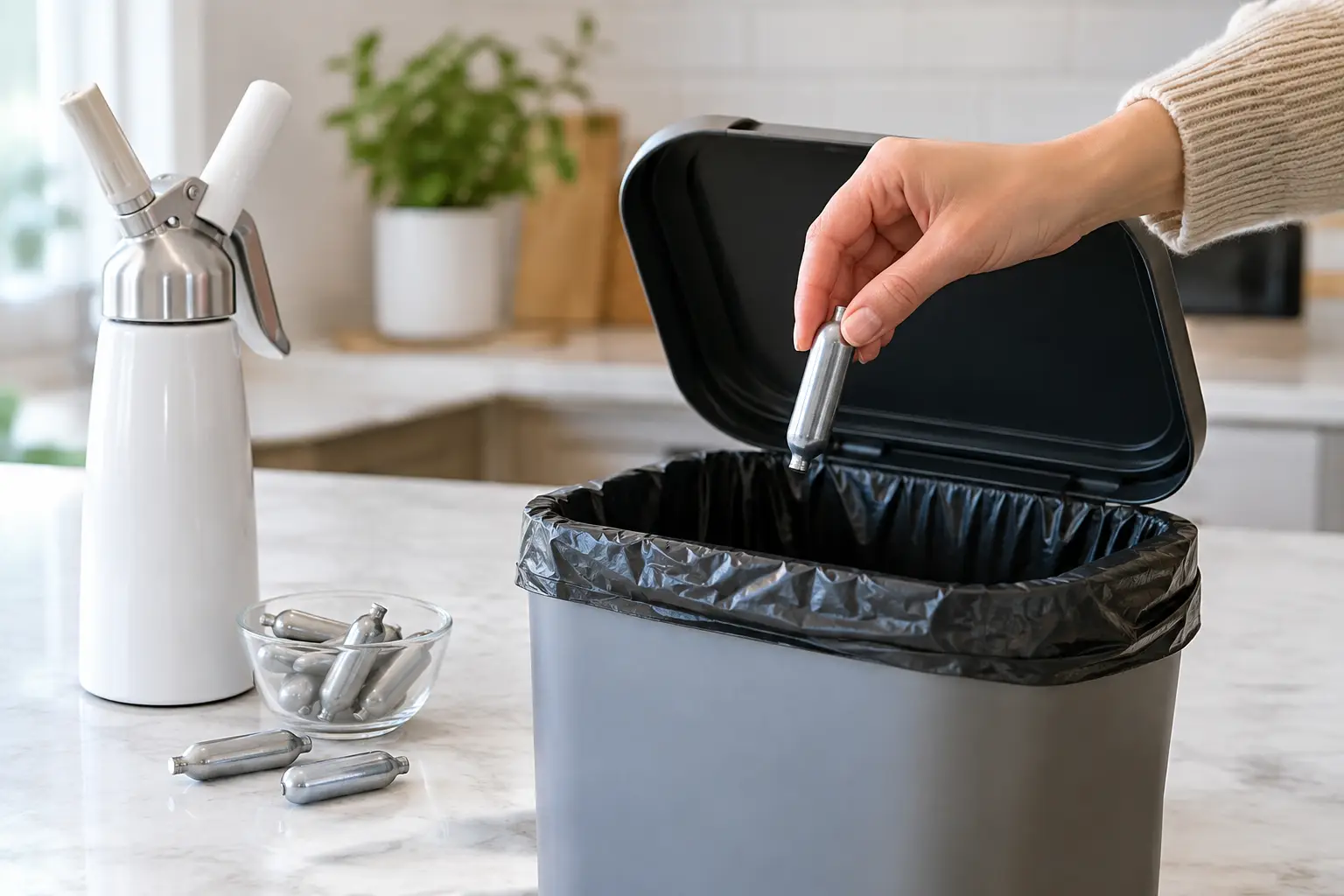
After charging your dispenser, remove the empty cartridge according to the dispenser manufacturer’s directions. If it is an approved standard charger used in a functioning dispenser, it should no longer be under pressure after use. Let it sit in a secure location away from heat while you finish service, then keep it separate from food prep surfaces and sharp tools.
Before placing it in any recycling stream, confirm the rules for your city, county, waste hauler, or metal recycler. Acceptance varies widely. Some facilities accept completely empty steel chargers with scrap metal; others do not want them in curbside bins because small metal items can fall through sorting equipment or because they cannot verify the cartridge is empty.
When your local program accepts empty chargers, collect them in a clearly labeled, sturdy container until your next approved recycling drop-off. This approach works especially well for dessert stations, bar programs, caterers, and other high-volume culinary operations. It keeps small cartridges out of the wrong bin and gives your team one consistent closeout procedure.
If your local recycler does not accept them, ask whether the facility recommends a scrap-metal location, household hazardous waste program, or another designated collection option. Follow that direction rather than guessing. Local guidance always takes priority over a general rule found online.
What not to do with used chargers
The charger may be small, but the wrong disposal method can damage equipment or put people at risk. Do not place a charger in a fire, near a grill, in direct high heat, or in a trash compactor. Do not crush it with tools, drill into it, or try to flatten it for space-saving purposes.
Do not put a charger in a recycling bin simply because it is made of steel. Steel is recyclable, but the facility must be equipped and willing to accept that specific item. For the same reason, do not leave cartridges loose in a kitchen’s mixed recycling bin where staff may assume they can be handled like cans.
Never use a charger outside its intended culinary purpose. Direct inhalation of nitrous oxide is dangerous and can lead to severe injury or death. Culinary equipment belongs in the hands of responsible adults using compatible tools for food and beverage preparation.
What to do with unused or questionable chargers
An unused charger is still pressurized. If you have unopened inventory that is in good condition and remains within the product’s stated storage guidance, keep it in a cool, dry place away from sunlight, flames, and heat sources. Store it where it cannot roll, fall, or be accessed by children.
If you no longer need unused chargers, do not dispose of them in household trash or standard recycling. Contact your local household hazardous waste program, waste authority, or a qualified gas-cylinder disposal service for instructions. The best route depends on local regulations and whether the item is a small cartridge or a larger cylinder.
Treat damaged, corroded, leaking, or unusually warm chargers as a separate situation. Do not install a damaged charger in a dispenser and do not attempt to test it. Move people away from the immediate area if you suspect a leak, avoid ignition sources, ventilate the space if it can be done safely, and contact local emergency services or your local hazardous waste authority for direction. For a damaged large tank, follow the cylinder supplier’s safety guidance and use a qualified service provider.
Build disposal into your kitchen routine
High-performance culinary work relies on repeatable systems. The same discipline that keeps a foam stable and a cocktail program moving should guide charger disposal. Designate a small, labeled container for discharged cartridges in a staff-only area. Keep it dry, stable, and away from heat.
For restaurant, catering, and event teams, include charger handling in opening and closing checklists. The employee changing a dispenser should know where used cartridges go, who manages the collection container, and which local recycling outlet receives the accumulated material. This is more reliable than asking staff to make an individual disposal decision during a rush.
Home cooks can use the same principle on a smaller scale. Keep discharged chargers together until you have confirmed the local recycling option, rather than dropping each one into a random household bin. A thoughtful system protects your space and makes inventive cooking feel as organized as it looks on the plate.
A quick service-station check
Before wrapping up a shift, confirm that chargers have been removed from dispensers, unused cartridges are stored correctly, and discharged cartridges are in the designated collection container. Check that no cartridges are near ovens, burners, dish machines, or waste compactors. Finally, make sure your recycler’s current rules have not changed, especially if you operate in multiple cities or travel for events.
Larger tanks require a different plan
Culinary nitrous oxide tanks offer efficiency for high-volume mixologists, dessert teams, and ambitious home setups, but they require more deliberate end-of-life handling. Do not vent a tank intentionally, remove its valve, puncture it, or place it in any trash or recycling container. Even a tank that seems spent may retain pressure.
Keep the cylinder upright and secured when possible. Contact the seller, cylinder supplier, a local hazardous waste program, or a specialized cylinder recycler to ask about return, exchange, or approved disposal. Some regions have specific rules for compressed-gas cylinders, and the right option may depend on cylinder size, valve type, and condition.
That extra step is worth it. A well-managed gas program supports the dependable, efficient kitchen workflow that serious culinary work demands, while protecting staff, sanitation crews, and recycling facilities.
Responsible disposal is the final move in a great service. Use each charger for its intended culinary purpose, respect local recycling rules, and give every empty cartridge or unused cylinder a safe, deliberate next destination.