
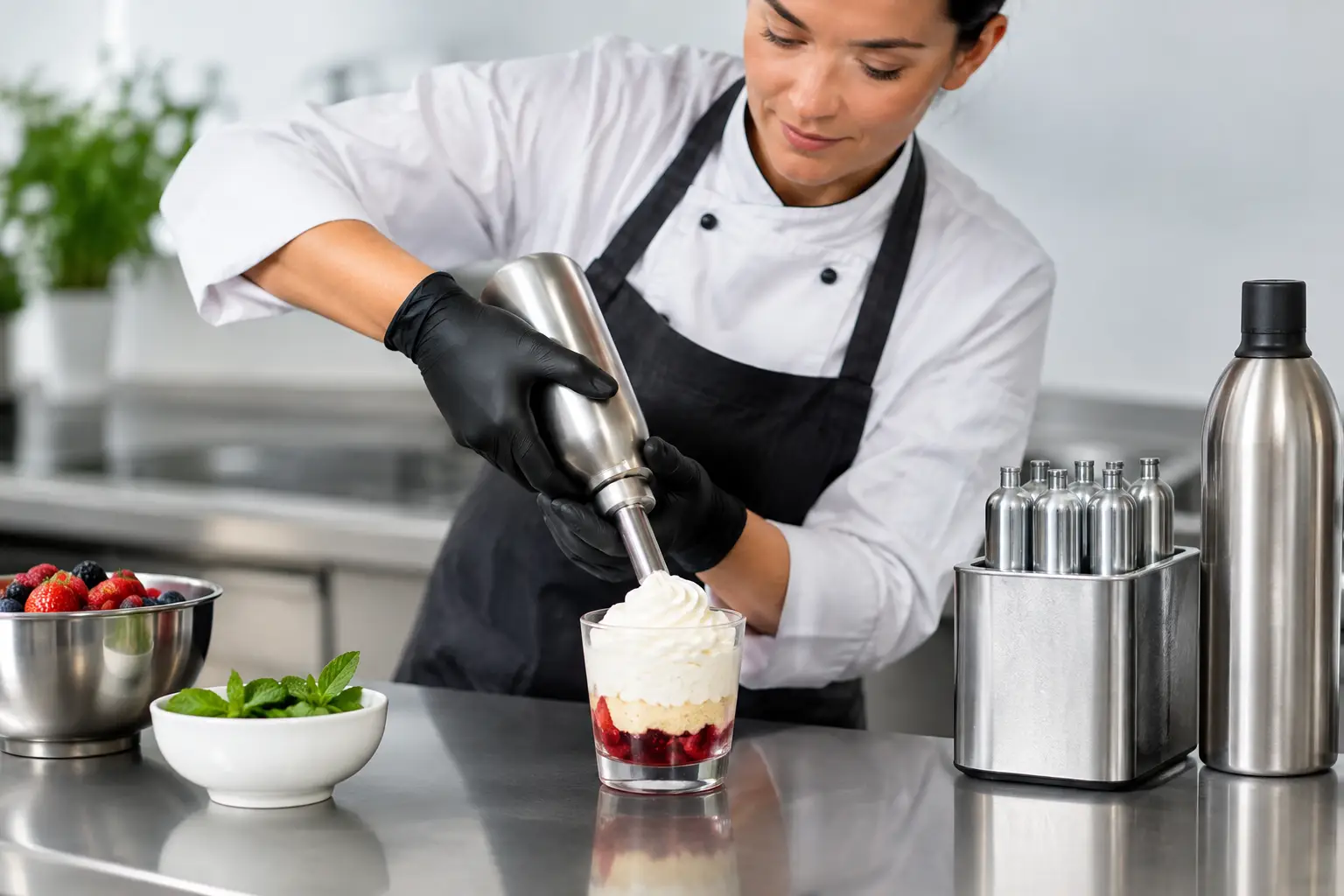
A perfect quenelle of whipped cream, a fast-infused cocktail, or a light espuma starts with controlled pressure. That is why culinary nitrous oxide safety tips belong in every serious kitchen workflow, from a busy dessert station to an ambitious home bar. N2O can deliver fast, polished results when it is handled with purpose, the correct equipment, and zero shortcuts.
Culinary nitrous oxide is for food and beverage preparation only. Direct inhalation from tanks or chargers is dangerous and has no place in professional service, at-home entertaining, or creative recipe testing. Treat every cylinder, charger, dispenser, and regulator as pressurized culinary equipment, not as a novelty.
Culinary Nitrous Oxide Safety Tips Start Before Service
The safest moment to prevent a problem is before the first pour, charge, or infusion. Begin with equipment that is made for culinary N2O and compatible with the format you are using. A whipped-cream dispenser is not interchangeable with a large tank regulator, and a regulator designed for another gas should never be assumed to fit or perform correctly with nitrous oxide.
Inspect your setup in good light. Check the dispenser body, head, gasket, threads, charger holder, regulator connections, and hose for visible damage, contamination, or worn seals. If a gasket is cracked, flattened, missing, or sticky, replace it before use. A small seal problem can become a leak under pressure, which turns an easy prep task into a service interruption.
Read the instructions that came with the specific product in front of you. Capacity, attachment sequence, pressure settings, cleaning limits, and storage requirements vary by dispenser, regulator, and cylinder size. Experienced chefs and bartenders know that speed comes from a repeatable setup, not from treating every piece of gear as identical.
Store Cylinders Like Pressurized Equipment
Nitrous oxide cylinders and chargers should be kept upright in a cool, dry, well-ventilated place, away from direct sunlight, ovens, grills, hot vehicles, open flames, and other heat sources. Heat raises internal pressure. A cylinder left in the wrong environment can become unsafe even when no one is actively using it.
Choose a storage area that is secure and out of reach of children and unauthorized users. In a restaurant, that may mean a designated dry-storage zone or locked cage. At home, it may mean a stable cabinet or utility area where the cylinder cannot be knocked over. Large tanks should be restrained or secured against tipping during storage and service.
Keep cylinders away from corrosive chemicals, standing water, and clutter that can damage valves or make a leak harder to notice. Do not store N2O in a sealed, unventilated small room. Good airflow is a practical safeguard whenever pressurized gas is on site.
Build a Clean, Controlled Connection
Before connecting a tank, make sure the regulator is closed and the cylinder valve is protected until you are ready to use it. Position the cylinder upright on a stable surface, then attach only the compatible, food-service-rated regulator and fittings intended for that cylinder. Never force a connection. Resistance usually signals a mismatch, damaged threads, or an incorrectly seated seal.
Keep the valve and connection area clean and dry. Avoid improvised adapters, altered fittings, and damaged hoses. They can compromise a pressure system that is designed to work within exact tolerances. If you hear persistent hissing, see unexpected frosting, or suspect a leak, stop service. Move people away from the area, ventilate the space, and contact the supplier or a qualified equipment professional for guidance.
Do not attempt to repair pressurized cylinders, valves, or regulators yourself. A trained service provider can determine whether the issue is a replaceable gasket, a faulty accessory, or a cylinder that must be removed from use. The cost of pausing prep is far lower than the cost of gambling with pressurized equipment.
Use Dispensers for Recipes, Not Experiments
With a whipped-cream dispenser, fill only to the manufacturer’s marked maximum line. Overfilling leaves too little headspace for the gas to work correctly and can create messy, inconsistent dispensing. Strain mixtures thoroughly before loading them into a dispenser. Seeds, pulp, gelatin clumps, spice fragments, or powdered ingredients can block the valve and produce uneven pressure release.
Use the prescribed number and size of chargers for the dispenser capacity. More chargers do not equal better texture. They can over-pressurize the system, waste product, and put stress on seals and moving parts. Once charged, shake according to the recipe and manufacturer directions, then dispense with the nozzle pointed safely away from faces, hands, and plated food until you are ready to serve.
Never open a pressurized dispenser. Follow the manufacturer’s depressurization and cleaning procedure before removing the head, changing parts, or washing the unit. Metal components can become extremely cold during charging and dispensing, so give the equipment time to return to a safe handling temperature when needed.
Respect Temperature, Pressure, and Ingredient Limits
Nitrous oxide is powerful because it works under pressure, and temperature changes the way that system behaves. Do not heat a sealed dispenser or cylinder, place it in boiling water, or leave it near a heat source to speed up a recipe. If a preparation needs warmth, follow a dispenser manufacturer’s stated temperature range and use equipment intended for that application.
Cold is also part of the equation. Rapid gas release can chill fittings, chargers, and metal surfaces enough to cause cold burns. Handle charged equipment deliberately, keep hands clear of discharge points, and avoid touching frosted connections. Gloves can be useful during high-volume prep, but they do not replace correct technique.
For infusions, use only recipes and ingredients suitable for your equipment. Alcohol, acids, oils, solids, and warm liquids can each change the process. A cocktail program may need a different procedure than a pastry station, so test new preparations in small, controlled batches before bringing them into a high-volume service window.
Keep the Culinary Team on the Same Page
The most dependable kitchens make safety visible. Label cylinders and accessories, keep operating instructions accessible, and show every team member how your specific dispenser or regulator setup works. This matters especially when staff rotate between pastry, bar, catering, and prep roles.
Set a simple rule: only trained adults handle N2O equipment, and no one improvises when something feels off. A team member should know where equipment is stored, who is authorized to connect tanks, and what to do if there is a suspected leak or damaged component. That clarity protects people, preserves inventory, and keeps a polished guest experience from getting derailed by preventable confusion.
For home cooks, the same standard applies. Keep culinary N2O equipment away from guests and children during parties, avoid passing chargers or tanks around, and handle prep before the gathering gets busy. Restaurant-style presentation feels effortless because the behind-the-scenes process is organized.
Disposal and Transport Need the Same Discipline
Empty chargers and cylinders still deserve careful handling. Do not puncture, crush, burn, or place them near heat. Follow local disposal rules and the manufacturer’s directions for chargers, cylinders, and any packaging. If you are unsure whether a cylinder is empty or serviceable, treat it as pressurized until a qualified source confirms otherwise.
When transporting tanks, keep them upright, secured against movement, and protected from excessive heat. Do not leave them in a parked car or loose in a trunk. For larger cylinders and bulk inventory, plan delivery, storage, and movement routes before the shipment arrives. Galaxy Gas customers ordering for events, bars, or high-volume kitchens can save real time by preparing a secure receiving area in advance.
When to Stop and Get Help
Stop using the equipment immediately if a cylinder is damaged, a valve is difficult to operate, a regulator will not seat properly, a dispenser will not hold pressure as expected, or any component shows unusual frosting or leakage. Do not try to “use up” questionable equipment. Isolate it from service and seek qualified assistance.
If anyone feels dizzy, confused, short of breath, or loses consciousness after possible gas exposure, move them to fresh air if it is safe to do so and seek emergency medical help right away. Culinary creativity should always be built on a workspace where people can breathe easily, work confidently, and focus on the next exceptional plate or pour.