

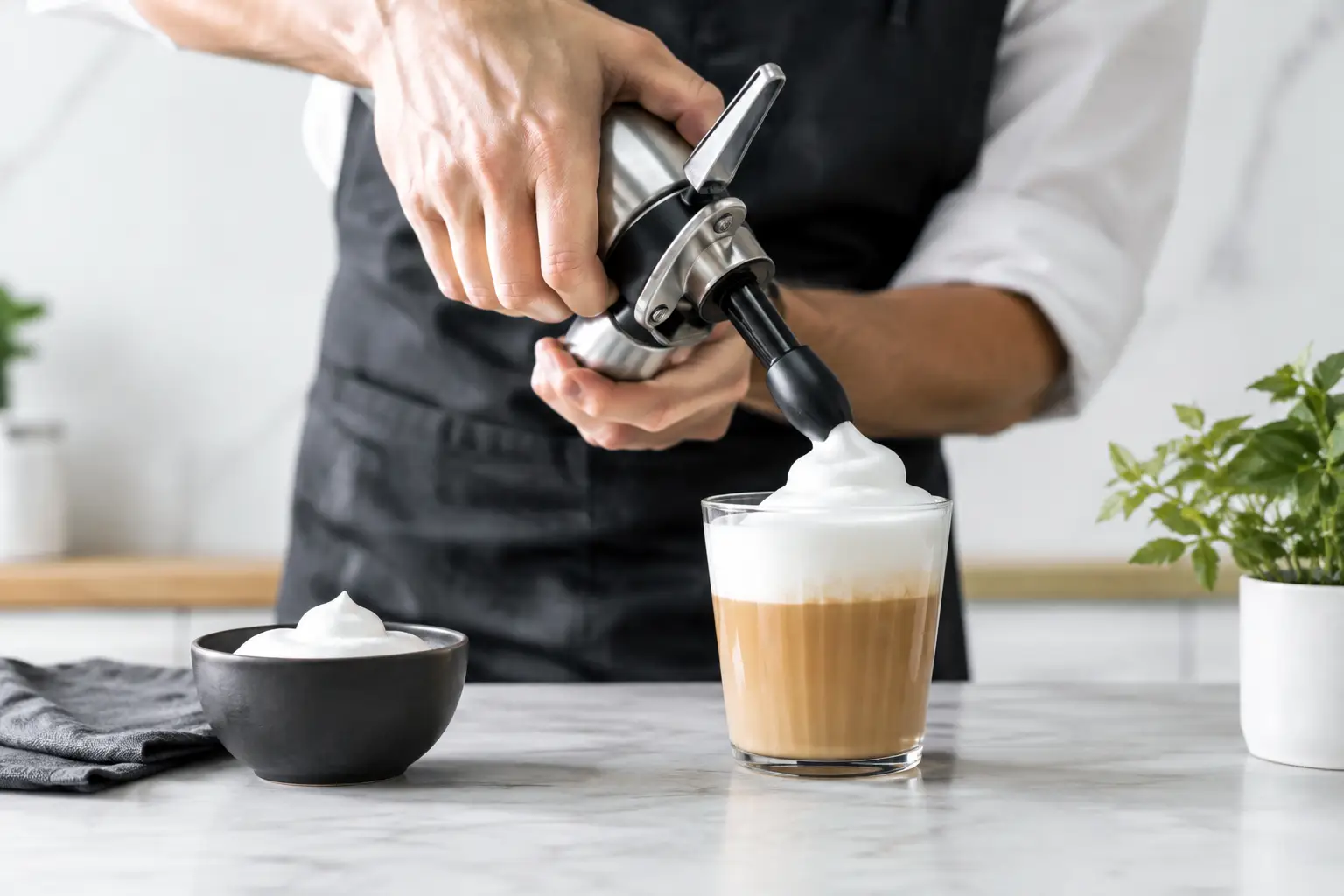
A foam that collapses before it reaches the table can make a composed dessert look unfinished, while a dense, cleanly piped espuma can turn a familiar dish into a signature moment. Professional foam siphon techniques are less about chasing theatrical effects and more about controlling texture, temperature, flavor, and timing with the same discipline used for sauces and pastry work.
For Michelin-minded chefs, high-volume mixologists, caterers, and ambitious home cooks, a siphon earns its space when it produces repeatable results. The goal is not simply more foam. It is a foam with a clear purpose: lifting a rich dish, adding aroma to a cocktail, creating contrast on a plated dessert, or delivering a light finish that holds through service.
Start With a Base Built for Foam
The siphon cannot rescue a base that is too thin, too gritty, or poorly balanced. Before charging, decide what the foam needs to do. A warm potato espuma needs body and a soft, spoonable structure. A citrus cocktail foam needs a lighter finish with enough stability to sit on the drink without becoming heavy. A whipped vanilla cream needs cold temperature, adequate fat, and a clean dairy flavor that does not compete with the dessert.
Fat, protein, natural pectin, starch, gelatin, agar, and other culinary stabilizers can each provide structure, but they behave differently. Cream is forgiving because fat supports volume and a silky mouthfeel. Fruit purees can be more delicate, especially when acidity is high. Vegetable foams may need more attention to viscosity and straining. The right choice depends on whether the foam will be served immediately, held briefly on a pass, or presented across a longer event service.
A useful professional standard is to taste the base before it goes into the siphon. Chilling and aeration can soften perceived sweetness, salt, spice, and acidity. Make the liquid slightly more expressive than the final result needs to be, then adjust with restraint. An over-seasoned foam is difficult to hide because its flavor reaches the palate quickly.
Strain Like Service Depends on It
It does. Fine particles are one of the fastest ways to create inconsistent dispensing, clogged tips, and a frustrating reset during a busy service. Even bases that look smooth can contain pulp, spice fragments, herb fibers, or small curds that interfere with the valve and nozzle.
Pass the mixture through a fine-mesh strainer before filling the siphon. For refined sauces, fruit preparations, or herb-forward bases, a second pass through a finer filter may be worth the extra minute. This is especially true when creating a foam for dozens of plated courses, where one clogged dispenser can slow the entire line.
Keep the fill line in mind as well. Overfilling leaves too little room for gas to do its work and can compromise consistency. Underfilling may be practical for a small batch, but it can change how the siphon performs depending on the model. Use a food-grade siphon and follow its manufacturer instructions for capacity, compatible chargers, temperature limits, and charging requirements.
Professional Foam Siphon Techniques Begin With Temperature
Temperature determines far more than whether a foam feels warm or cold. It affects viscosity, stability, dispensing pressure, and the way flavors land. Cold whipped preparations generally benefit from being thoroughly chilled before charging and dispensing. A properly chilled cream base develops better structure and gives a cleaner, more controlled ribbon.
Warm foams require a different kind of attention. A base that is too cool may thicken prematurely and dispense unevenly. One that is too hot can exceed equipment limits or create a loose, unstable result. Work within the safe temperature range specified by your siphon manufacturer, and use a controlled water bath when holding a warm preparation for service.
For cocktail programs, temperature can be the difference between a crisp crown and a puddle. A cold glass, a chilled base, and a foam made close to service create a more polished drink. If the foam includes juice, puree, or acidic ingredients, test it in the actual glassware and against the finished cocktail. What holds beautifully on a spoon may behave differently over ice, bubbles, or a high-proof surface.
Charge for Consistency, Not Drama
Nitrous oxide is a culinary tool for creating aeration in compatible food siphons. Use only food-grade culinary gas products and the charger quantity specified for your equipment and recipe. More gas is not automatically better. Overcharging can create an overly forceful dispense, an uneven texture, or a product that wastes quickly during a rush.
After charging, gently shake according to the recipe and equipment guidance so the gas distributes through the base. Cold cream and thick mixtures may need more deliberate agitation than a lighter liquid, but aggressive shaking is not a substitute for a properly formulated base. If a foam will not hold, revisit the recipe before changing the charging approach.
Never attempt to modify a siphon, force a mismatched component, or use damaged seals, threads, or nozzles. Inspect the dispenser before service, especially in a fast-paced bar or catering environment where equipment is handled repeatedly. Culinary nitrous oxide products are for food and beverage preparation only. Direct inhalation is dangerous and has no place in a professional kitchen or bar program.
Choose the Tip for the Food, Not the Photo
Decorative tips can make a dessert feel more finished, but they also change how the foam exits the siphon. A narrow tip can create definition for whipped cream rosettes, while a wider opening can better suit a warm espuma or a thicker vegetable foam. The cleanest choice is often the one that lets the texture speak for itself.
Test the tip before the first plate leaves the pass. Dispense a small amount into a tasting spoon and look for smoothness, volume, and separation. If the foam sputters, holds too much liquid, or comes out dense, stop and diagnose the issue. The problem may be temperature, a blocked tip, a mixture that is too thick, or a base that needs further straining.
For plated food, keep the nozzle close to the surface and dispense with a steady hand. Starting too high can create a loose, airy pile with less control. On drinks, consider the final garnish before adding foam. Citrus zest, spice, cocoa, dehydrated fruit, and herbs can add visual contrast, but heavy toppings can puncture a fragile surface.
Build a Service System Around the Siphon
The most successful professional foam siphon techniques fit into a station, not just a recipe. Label each dispenser with the preparation, date, and service notes. Keep cold siphons refrigerated until needed, and set warm siphons in an appropriate holding setup that respects the equipment guidelines. A backup base can be more valuable than a second decorative garnish when a large event is underway.
High-volume teams should standardize recipes by weight, not by intuition. Record the base yield, fill level, serving temperature, charger specification, holding window, and preferred nozzle. This turns a one-off success into a dependable component that every cook or bartender can execute.
For culinary teams sourcing chargers, dispensers, regulators, and accessories, Galaxy Gas offers a broad lineup designed for serious food and beverage preparation, from restaurant service to inventive home menus. The strongest purchase decision is still the one that matches your equipment, expected volume, and menu needs rather than simply choosing the largest available option.
Clean Immediately After Service
A siphon is precision equipment, and dried dairy, sugar, puree, or starch can create tomorrow’s problem. Depressurize and disassemble only according to the manufacturer’s instructions, then wash the body, nozzle, gasket, and small components thoroughly. Pay particular attention to the tip and valve area, where residue can build up out of sight.
Allow components to dry completely before reassembly and storage. Replace worn gaskets and damaged parts promptly rather than trying to stretch one more service from a compromised seal. This is a small operational habit with a major payoff: better hygiene, more reliable dispensing, and less waste during peak hours.
The most memorable foams are not built to impress the siphon. They are built to make the dish or drink taste sharper, look more intentional, and give the guest one more reason to remember the experience.