

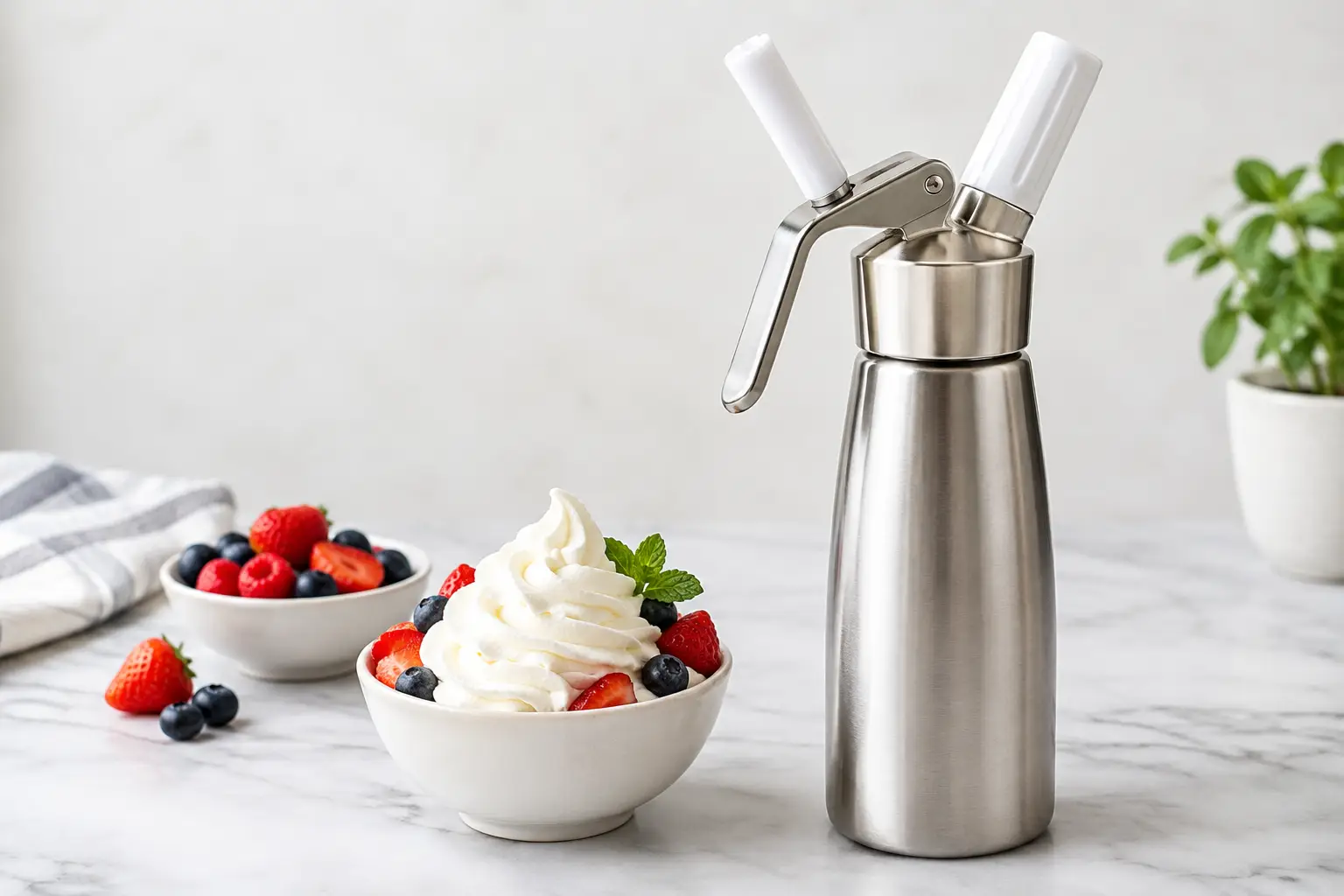
A soft peak that holds through dessert service, a cold foam that finishes an espresso cocktail, a fruit-infused cream that tastes as vivid as it looks – this is where a whipped cream dispenser earns its place. It is not just a shortcut for topping pie. For serious home cooks, pastry teams, caterers, and high-volume bars, it is a compact tool for faster prep, cleaner presentation, and more inventive menus.
The best results come from matching the dispenser to the way you work. Capacity, material, valve quality, charging compatibility, and cleaning habits all shape whether your first pour is just good or reliably restaurant-ready every time.
What a Whipped Cream Dispenser Does
A whipped cream dispenser uses culinary-grade nitrous oxide to aerate liquids and create a light, stable texture. Classic sweetened cream is the obvious use, but the tool can go far beyond dessert. Think vanilla cold foam for coffee, savory herb cream for soups, mascarpone topping for waffles, or a finishing layer for cocktails that need visual impact.
For chefs and ambitious home cooks, the appeal is control. You decide the sweetness, flavor, density, and portion size instead of relying on a pre-made topping with a short window of peak texture. In a service setting, that means more consistent plates. At home, it means the final course can look like it belongs on a restaurant menu without turning prep into an all-day project.
Dispensers can also support culinary infusions when used according to the equipment and ingredient guidance. A rapid infusion workflow can bring fresh character to spirits, syrups, oils, and garnishes for a bar program built around speed and originality. The goal is not novelty for novelty’s sake. It is getting clean, repeatable flavor that makes a signature drink worth ordering again.
Choose the Right Whipped Cream Dispenser Size
Size is the first practical decision. A smaller dispenser suits home kitchens, intimate dinner parties, and occasional coffee or dessert service. It takes up less refrigerator space and helps prevent waste when you only need a few servings at a time.
A larger model makes more sense for busy brunches, catering trays, bakery production, or cocktail programs with consistent demand. If your staff is refilling a small dispenser several times during a shift, the bigger vessel can reduce interruptions and help service move with more confidence.
There is a trade-off. Large capacity is efficient, but only when the volume will actually be used. Cream and other perishable preparations still need proper cold storage and food-safe handling. For a home cook making weekend drinks and a few plated desserts, a compact dispenser may be the smarter purchase. For a dessert station producing dozens of consistent portions, capacity quickly becomes a performance feature.
Aluminum or Stainless Steel?
Aluminum dispensers are lightweight, approachable, and often ideal for standard cold preparations. They are a solid fit for cooks who want reliable whipped cream, cold foams, and a straightforward tool that is easy to handle.
Stainless steel models bring a more professional feel, added durability, and a better fit for demanding kitchens. They are often preferred by operators who need equipment that can stand up to frequent use, repeated cleaning, and a polished front-of-house or bar presentation. Some stainless models are also designed for preparations with broader temperature needs, but the manufacturer instructions should always set the limits.
Neither material automatically makes a better foam. The right choice depends on volume, menu ambition, handling preference, and how often the dispenser will be in rotation.
Build Better Texture From the Start
A dispenser can improve speed, but ingredients still determine the finish. For traditional whipped cream, use cold heavy cream with enough fat to hold air properly. Add sweetener and flavorings that dissolve cleanly. Powdered sugar is often helpful because it blends easily and can support a smooth texture, while extracts, citrus zest, spices, and coffee flavors let you build a house style.
Avoid adding chunks, seeds, pulp, or poorly dissolved powders directly into the vessel. They can clog the nozzle and turn a quick garnish into a frustrating cleanup project. If you are working with fruit, herbs, cocoa, or spices, strain the mixture thoroughly before filling. A fine texture on the front end protects the dispenser and produces a cleaner, more controlled result on the plate.
Temperature matters, too. Cold ingredients whip more effectively for cold applications, and a chilled dispenser can help maintain consistency. Give the preparation adequate time to rest after charging when the recipe calls for it. The difference between airy cream and a loose, uneven pour is often patience rather than more gas.
Think Beyond the Dessert Cart
The most useful dispenser recipes solve a service problem or add a distinct menu moment. A cinnamon foam can turn hot chocolate into a premium seasonal item. Whipped goat cheese can add a lighter finish to crostini. A smoked maple cream can give an old fashioned-inspired dessert a memorable final layer.
For bars, cold foam opens opportunities that standard shaken drinks cannot always deliver. Espresso cocktails, tropical highballs, dessert martinis, and zero-proof creations can gain texture and aroma without slowing the ticket line. Test recipes before service, document the ratios that work, and use a consistent garnish plan. That is how an inventive idea becomes a profitable repeatable build.
Chargers, Capacity, and Reliable Service
Your dispenser is only as dependable as the culinary gas supply supporting it. Use compatible food-grade nitrous oxide chargers or tank systems intended for culinary equipment, and follow the directions supplied with both the dispenser and gas product. This protects flavor quality, helps the system perform as intended, and keeps your workflow predictable.
For occasional home use, individual chargers can be a convenient format. For a restaurant, catering company, or high-volume mixology program, larger-capacity culinary gas options and the appropriate regulator setup can reduce downtime and simplify inventory planning. The right format is the one that fits your pace of service, storage capacity, and expected output.
Galaxy Gas offers a broad selection of culinary nitrous oxide products, dispensers, compatible accessories, and recognized charger brands for buyers who need choices across formats and order volumes. Whether you are stocking a dessert station or building a more ambitious cocktail program, consistency should be the standard, not a lucky outcome.
Care That Keeps the Dispenser Performing
A quality dispenser is a working kitchen tool, and regular care protects the investment. Clean the bottle, head, nozzle, and removable components after each use according to the manufacturer’s instructions. Pay close attention to narrow openings, where dried cream or syrup can affect flow and sanitation.
Do not leave perishable mixtures in the dispenser beyond their safe holding time. Refrigerate cold preparations promptly, label them in professional settings, and discard anything that no longer meets your kitchen’s food-safety standard. Inspect gaskets and seals regularly. A worn seal can lead to poor performance, leaks, and inconsistent results at exactly the wrong moment.
Store culinary gas products as directed, away from heat and out of reach of children. They are designed for food and beverage preparation only. Never inhale nitrous oxide directly from a tank or charger. That misuse is dangerous and has no place in a professional kitchen, bar program, or home cooking routine.
Make Every Finish Look Intentional
The visual payoff of a dispenser is immediate, but the most effective presentations are not overloaded. Use foam or whipped cream to create contrast: a bright white crown on dark chocolate, a savory swirl over a deep orange soup, or a flavored topping that signals what is inside the glass before the first sip.
Nozzle selection changes the personality of the result. A star tip gives desserts a classic pastry-shop finish, while a smoother tip can feel modern and restrained on beverages or savory plates. Practice dispensing with the same angle and pressure so every serving looks deliberate, even during a rush.
Start with one preparation your menu already needs, then refine it until it is unmistakably yours. A whipped cream dispenser rewards that kind of focused creativity: less time chasing inconsistent texture, more room to serve something guests will remember.